
The changing landscape of Livestock Diseases in 2025
 CLAL TeamPosted on
By: Alberto Lancellotti
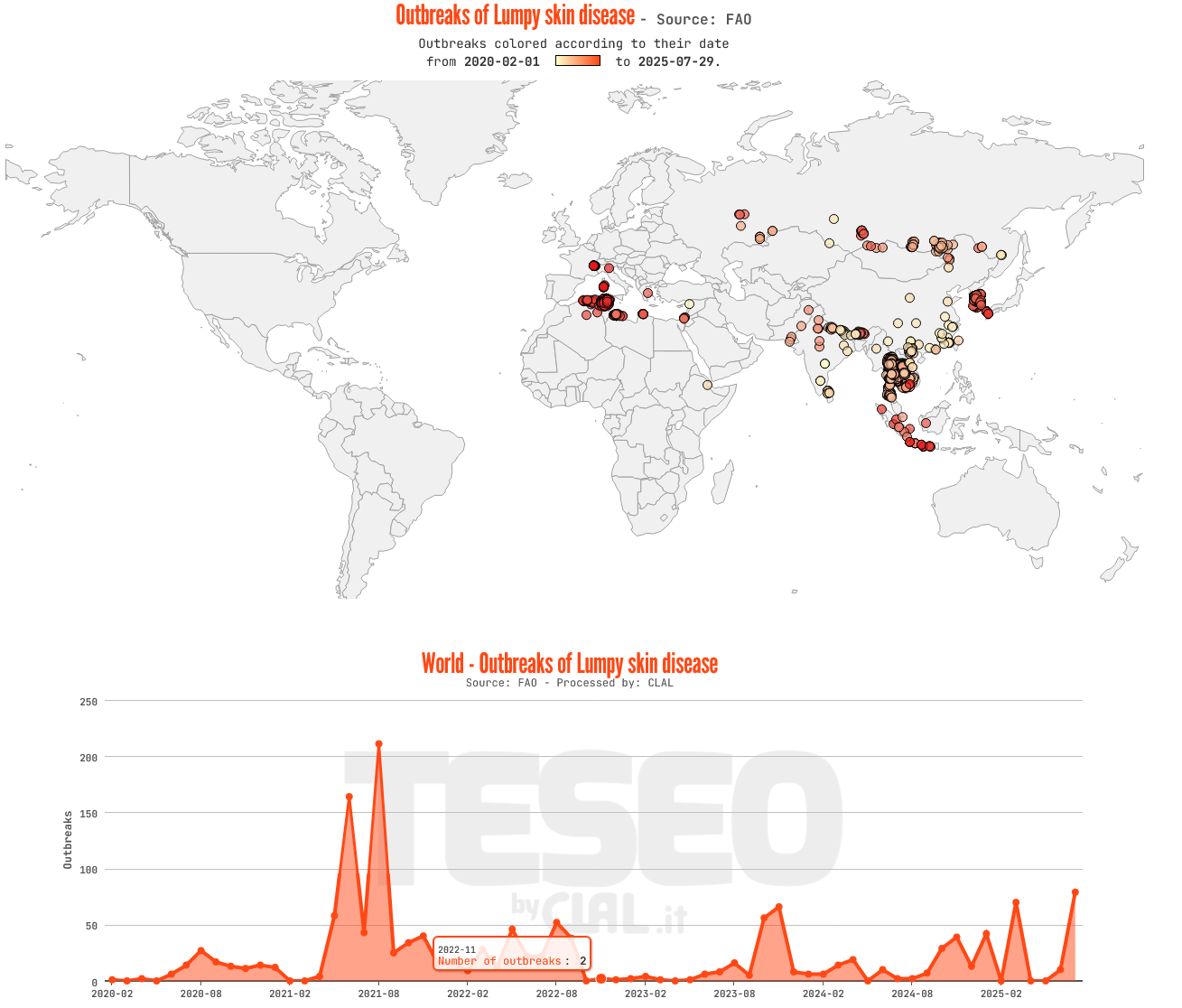
In recent months, various animal diseases have raised increasing concern across the livestock sector, both globally and at the regional level. Below is a summary of the latest updates regarding these critical issues, with a specific focus on the current situation in Europe.
Blue Tongue
During the second half of 2024 and the early months of 2025, Blue Tongue disease has had a significant impact on the European farming sector, particularly in France and Germany. The disease has also affected Southern Europe, with several confirmed cases in countries such as Italy and Greece, however it has primarily impacted goats and sheep in these regions.
More recently, a gradual slowdown in disease spread has been observed across Europe, an encouraging sign, especially considering that summer conditions typically favor transmission due to the increased presence of insect vectors. This decline appears to be linked to drier weather and broader vaccine coverage in affected areas.
Check the new page on TESEO
focused on Blue Tongue >
Foot-and-Mouth Disease
After several years of absence, Foot-and-Mouth Disease re-emerged in Europe, with the first outbreak reported in Eastern Germany at the beginning of 2025, followed by cases in Slovakia and Hungary. Containment measures were implemented swiftly and effectively. Nevertheless, the potential impact on trade flows has raised considerable concern among stakeholders in the dairy sector.
As of now, no new FMD cases have been reported within the EU in the past three months. However, the disease remains active globally, particularly in countries such as South Africa and Tunisia, maintaining a high level of health alert.
Check the new page on TESEO
focused on Foot-and-mouth disease >
African Swine Fever (ASF)
African Swine Fever continues to represent one of the most critical global threats to the pig farming industry. In addition to its presence in Africa and Asia (notably in South Africa, the Philippines, and Vietnam), the virus remains very active in Eastern Europe.
In 2025, Europe has recorded a significant increase in cases involving wild boars. This trend is particularly evident in countries such as Poland, Germany, Latvia, and Hungary. However, outbreaks affecting domestic pigs are also showing notable trends in several key players, such as Romania.
Check the new page on TESEO
focused on African Swine Fever (ASF) >
Highly Pathogenic Avian Influenza (HPAI) in Cattle
H5N1 Avian Influenza has recently crossed species barriers, affecting dairy cattle, primarily in the United States, with more than 15 states affected in 2024-2025, including California, the country’s leading dairy-producing region. Infected cattle have shown symptoms such as fever, reduced milk yield, and nasal discharge. Additionally, evidence of the virus in raw milk has been confirmed as early as 2024.
Outside of the US, only one case involving farmed cattle has been reported, in Peru. No cases have been detected in European cattle so far; however, several countries have already initiated preventive surveillance plans.
Check the new page on TESEO
focused on H5N1 Avian Influenza >
Lumpy Skin Disease (LSD)
Between June and July 2025, Lumpy Skin Disease re-emerged in Europe, with outbreaks in Sardinia, Lombardy, and southeastern France. Transmitted by biting insects, the disease affects cattle, causing fever, skin nodules, decreased milk production and, in severe cases, death.
Several non-EU countries have already implemented trade restrictions affecting the impacted areas:
- UK: Ban on raw milk, live animals, semen, and offal (excluding diaphragm and masseter muscles), skins and untreated derivatives. Exceptions apply to Parmigiano Reggiano and Grana Padano aged before 23/05/2025.
- Canada: Ban on dairy products made from unpasteurized milk collected after 23/05/2025. Italy removed from the LSD-free list.
- Japan: Ban on bovine semen, offal (except tongues), and unpasteurized milk and derivatives for animal feed.
- Australia: Italy removed from LSD-free list.
- USA: Ban on germplasm collected before 22/04/2025.
Although less contagious than Foot-and-Mouth Disease and not transmissible to humans, LSD has a substantial economic impact. Pasteurized and long-aged products remain safe and commercially viable.
Check the new page on TESEO
focused on Lumpy Skin Disease >
The current animal health situation in the European livestock sector requires ongoing monitoring and strengthened prevention and biosecurity measures. While there are some encouraging signs, such as the slowdown in Bluetongue transmission and the absence of new Foot-and-Mouth Disease cases, other diseases, such as African Swine Fever and Lumpy Skin Disease, continue to pose significant challenges.
Close cooperation between veterinary authorities, farmers, farm veterinarians, and institutions remains essential to contain risks, safeguard animal health, and ensure the economic sustainability of the sector.

TESEO.clal.it – The Animal Disease situation on TESEO’s Homepage
TESEO.clal.it – The new “Animal Health” section in TESEO’s Menu

The CLAL.it team is composed of young people who with the help of Computer Science study the dairy market and develop tools to provide the Operators of the dairy sector with a comprehensive real-time view of the national and international market trends.